
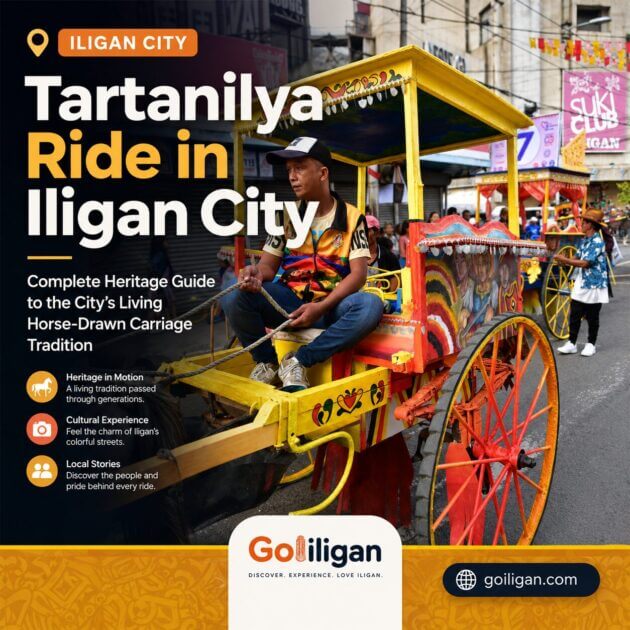
Discover the tartanilya ride experience in Iligan City. Learn where to ride, what route to take, what to expect, how it compares with other local transport, and why this horse-drawn carriage remains part of Iligan’s living heritage.
Explore this topic: Iligan Attractions & Recreation Hub
Introduction: Iligan’s Moving Heritage on Two Wheels
Most visitors know Iligan City for waterfalls, cold springs, Maria Cristina Falls, Tinago Falls, and the city’s famous natural scenery. But hidden inside downtown Iligan is another kind of attraction: slower, humbler, and deeply local.
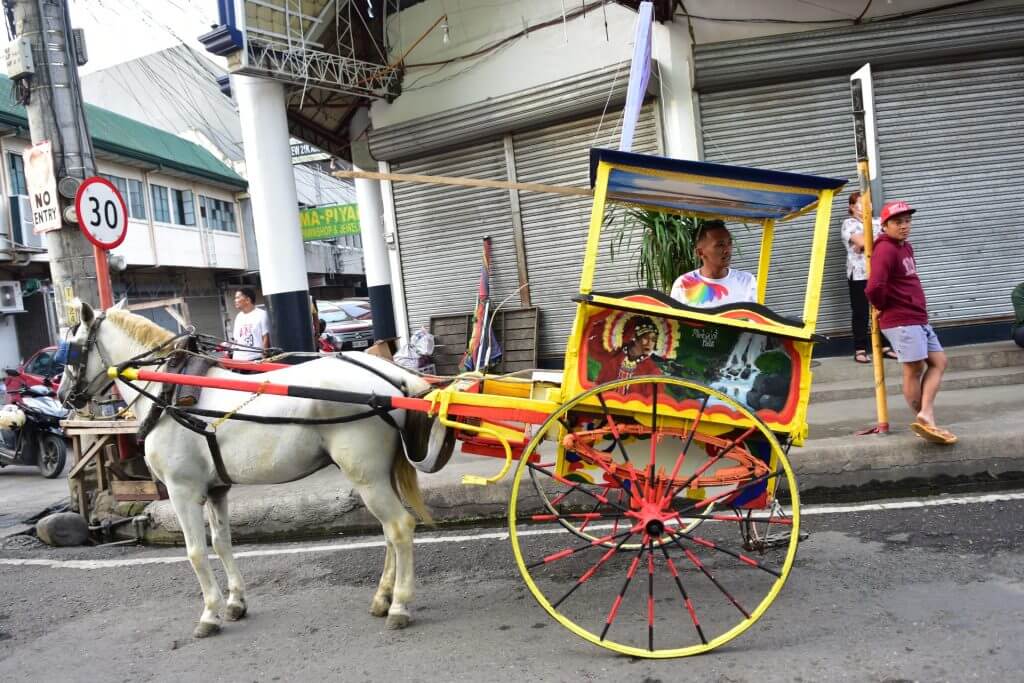
It is the tartanilya, Iligan’s horse-drawn carriage.
In other parts of the Philippines, people often call similar carriages kalesa or calesa. In Iligan, locals commonly use the word tartanilya or tartanilla. It is not just a photo opportunity. It is a working piece of transportation culture that still connects parts of the city, especially around the Pala-o, Badelles, and Tambacan areas.
A tartanilya ride gives visitors a different view of Iligan. Instead of speeding through traffic, you move at the rhythm of hooves, wooden wheels, street sounds, market chatter, and the everyday flow of local life. It is heritage you can actually sit in.
For travelers, families, balikbayans, students, content creators, and Iliganons who want to reconnect with the city’s older rhythm, the tartanilya is one of the most memorable downtown experiences in Iligan City.




Quick Facts About the Tartanilya in Iligan City
| Detail | Information |
|---|---|
| Local name | Tartanilya, tartanilla, sometimes called kalesa |
| Type | Horse-drawn carriage |
| Best known area | Downtown Iligan, especially Pala-o, Badelles Street, and Tambacan Road |
| Common use | Short-distance local transport and heritage experience |
| Best time to ride | Morning or late afternoon |
| Good for | Heritage tourism, local culture, slow city tour, family experience |
| Main caution | Confirm fare and route before boarding |
| Best paired with | Downtown walk, market visit, Iligan heritage stops, and coffee |
Official and Local Reference Links
Iligan City Tourism Facebook Page
https://www.facebook.com/TurismoIligan/
Iligan City Tourism post mentioning kalesa / tartanilya route
https://www.facebook.com/TurismoIligan/posts/kalesa-or-tartanilya-one-of-the-modes-of-transportation-of-iligan-cityvivaturism/323166455170895/
Iligan City Tourism post: Tartanilya ride experience
https://www.facebook.com/iligancitytourism/posts/when-in-iligan-experience-a-tartanilya-ride/3624101074295416/
MindaNews photo documentation of tartanilla near Pala-o Market
https://mindanews.com/photo-of-the-day/2023/10/tartanilla/
GoIligan: Iligan Visual Arts Festival Highlights Culture, Heritage, and Tourism with Winning Designs
https://goiligan.com/iligan-visual-arts-festival-highlights-culture-heritage-and-tourism-with-winning-designs/
Google Maps Links for Local Route and Entity Signals
Pala-o Public Market, Iligan City
https://www.google.com/maps/search/?api=1&query=Pala-o+Public+Market+Iligan+City
Badelles Street, Iligan City
https://www.google.com/maps/search/?api=1&query=Badelles+Street+Iligan+City
Tambacan Road, Iligan City
https://www.google.com/maps/search/?api=1&query=Tambacan+Road+Iligan+City
Iligan City Tourism Office
https://www.google.com/maps/search/?api=1&query=Iligan+City+Tourism+Office
Urban Coffee Studio, Tibanga, Iligan City
https://www.google.com/maps/search/?api=1&query=Urban+Coffee+Studio+Tibanga+Iligan+City
What Is a Tartanilya?
A tartanilya is a horse-drawn carriage traditionally used for short-distance transportation. It belongs to the same family of Philippine horse-drawn vehicles often called kalesa or calesa in places like Vigan, Intramuros, and Cebu.
In Iligan City, the word tartanilya carries stronger local meaning. It is not usually presented as a polished museum attraction. It is more grounded, more everyday, and more connected to street life.
The tartanilya is usually operated by a kutsero, the carriage driver who guides the horse, assists passengers, and knows the route. For many locals, the tartanilya is tied to memory: downtown errands, market trips, school days, city events, and the older rhythm of Iligan before modern transport became dominant.
That is what makes it special. It is not a staged heritage ride pretending to be old. It is a small but real piece of Iligan still moving through the present.
Why Iligan City Is Known for Tartanilya Rides
Iligan is one of the few Philippine cities where tartanilyas are still seen operating on public roads. While modern transportation now dominates most urban centers, Iligan has preserved this old form of mobility in selected downtown areas.
The most commonly referenced route is around Badelles Street down to Tambacan Road, with nearby pickup points around the Pala-o Market area. These locations give the tartanilya a clear local footprint and make the experience easier for visitors to understand.
This matters because heritage is not only about old buildings, monuments, and museums. Sometimes, heritage is a route. A street. A driver. A horse. A passenger who still chooses the slower way because it is practical, familiar, or meaningful.
In Iligan, the tartanilya sits between two worlds:
- It is a functional ride for short trips.
- It is also a cultural attraction for visitors.
- It supports local kutseros.
- It helps preserve a distinct Iligan transport identity.
- It gives the city another heritage experience beyond waterfalls.
That dual role gives the tartanilya strong local identity value.
Tartanilya vs Kalesa: Are They the Same?
In simple terms, they are closely related. The difference is mostly in local usage, place identity, and how the ride is experienced.
| Feature | Tartanilya in Iligan | Kalesa in Other Philippine Cities |
|---|---|---|
| Common location | Iligan downtown areas | Vigan, Intramuros, Cebu, heritage zones |
| Use | Local transport and heritage experience | Often tourism-focused |
| Local feel | Everyday, street-level, practical | Often curated for sightseeing |
| Route style | Limited downtown route | Usually heritage or tourist route |
| Best for | Experiencing Iligan’s living transport culture | Historical sightseeing |
| Atmosphere | Local, raw, community-based | More formal or tourist-oriented |
The Iligan tartanilya feels less like a costume and more like a surviving chapter of city life.
That is the difference.
Where to Ride a Tartanilya in Iligan City
The easiest areas to check are Pala-o, Badelles Street, Tambacan Road, and nearby downtown routes. Availability can vary, so it is best to ask locals, check the area during daytime, or follow updates from Iligan City Tourism.
1. Pala-o Market Area
Pala-o is one of the best-known reference points for finding tartanilyas. Local documentation has placed kutseros and tartanillas near this market area.
Google Maps:
https://www.google.com/maps/search/?api=1&query=Pala-o+Public+Market+Iligan+City
2. Badelles Street
Iligan tourism posts and local references mention the route around Badelles Street.
Google Maps:
https://www.google.com/maps/search/?api=1&query=Badelles+Street+Iligan+City
3. Tambacan Road
Tambacan Road is commonly mentioned as part of the tartanilya route.
Google Maps:
https://www.google.com/maps/search/?api=1&query=Tambacan+Road+Iligan+City
4. Downtown Iligan Nearby Areas
Depending on availability, you may see tartanilyas around downtown market zones, connecting streets, and local passenger pickup points.
Before going, check recent Iligan City Tourism updates or ask locals near Pala-o Market for the current pickup area.
How to Ride a Tartanilya in Iligan City: Step-by-Step Guide
Step 1: Go to a Known Tartanilya Area
Start around Pala-o Market, Badelles Street, or Tambacan Road. These are the most commonly mentioned tartanilya areas.
Step 2: Look for an Available Kutsero
A kutsero may be waiting near a market or roadside area. Approach politely and ask if the carriage is available.
Useful local phrases:
- “Pila ang plete?” means “How much is the fare?”
- “Asa kutob ang ruta?” means “How far does the route go?”
- “Pwede ra magpa-picture?” means “Can we take a photo?”
- “Salamat kaayo” means “Thank you very much.”
Step 3: Ask the Fare First
Do not board without confirming the fare. Fares can vary depending on distance, number of passengers, waiting time, and whether you are taking a normal ride or a short sightseeing-style ride.
Step 4: Confirm the Drop-Off Point
Tell the kutsero where you want to go. Some rides may follow a usual route. Others may depend on what the driver is willing to accept.
Step 5: Ride Safely and Respectfully
Sit properly, avoid sudden movements, and do not overload the carriage. If you are with children, keep them seated and supervised.
Step 6: Pay Directly After the Ride
Prepare small bills or coins. Tartanilya rides are usually cash-based.
How Much Does a Tartanilya Ride Cost in Iligan City?
There is no single publicly posted current fare that should be assumed for every tartanilya ride in Iligan City. The safest and most accurate rule is simple:
Ask the kutsero before boarding.
The fare may depend on:
- Distance
- Number of passengers
- Time of day
- Whether it is a normal commute-style ride or visitor experience
- Waiting time
- Special event or festival activity
- Route requested
Some older local tourism posts mentioned very low fares for regular short rides, but visitors should not treat old fare information as automatically current. Prices can change, and special rides may cost differently from regular transport-style rides.
For transparency, visitors should avoid assuming the fare. Ask first, agree clearly, then ride.
Suggested Visitor Practice
Before riding, say:
“Pila ang plete padulong didto?”
How much is the fare going there?
Or:
“Pila kung short ride lang?”
How much for just a short ride?
This keeps the experience fair for both the passenger and the kutsero.
Tartanilya Compared with Other Iligan Transportation Options
| Transport Option | Best For | Pros | Cons |
|---|---|---|---|
| Tartanilya | Short heritage ride, local culture | Unique, slow, memorable, very Iligan | Limited routes, slower, fare should be confirmed first |
| Jeepney | Budget commuting | Practical, widely used, affordable | Routes may confuse first-time visitors |
| Tricycle / pedicab | Short neighborhood trips | Convenient for nearby areas | Not always available everywhere |
| Taxi / car | Comfort and direct travel | Faster, easier for groups or seniors | More expensive than local options |
| Habal-habal | Hard-to-reach or flexible short trips | Flexible in some places | Not ideal for all travelers or weather conditions |
| Private van / tour vehicle | Waterfalls and day trips | Best for tourist itineraries | Less immersive for downtown culture |
The tartanilya is not the fastest way to move around Iligan. That is the point. It is for people who want the city to unfold slowly.
Pros and Cons of Riding a Tartanilya in Iligan City
Pros
1. It Is a Real Local Experience
This is not just a tourist prop. The tartanilya is part of Iligan’s working street culture.
2. It Supports Local Kutseros
A ride directly benefits the driver and helps keep the tradition visible.
3. It Is Great for Photos and Storytelling
For content creators, bloggers, students, and families, the tartanilya gives a strong visual identity to Iligan heritage.
4. It Gives a Slower View of Downtown
You notice details you would miss inside a fast vehicle: storefronts, people, market movement, street signs, old corners, and the daily rhythm of Iligan.
5. It Adds Variety to a Waterfalls Trip
After visiting Tinago Falls, Maria Cristina Falls, or Timoga Springs, a tartanilya ride gives your itinerary a heritage layer.
Cons
1. Routes Are Limited
You cannot expect the tartanilya to go everywhere in the city.
2. It Is Slower Than Modern Transport
If you are in a hurry, take another option.
3. Fare Information May Not Be Standardized
Always ask before boarding.
4. Weather Can Affect Comfort
Rain, heat, and traffic conditions can affect the ride.
5. Animal Welfare Should Matter
Responsible travelers should observe the condition of the horse and choose rides that appear safe and humane.
Benefits of the Tartanilya for Iligan City
Cultural Preservation
The tartanilya helps keep Iligan’s transport heritage alive in a city that continues to modernize.
Tourism Identity
It gives Iligan another memorable experience beyond waterfalls and food.
Local Livelihood
Kutseros and their families benefit when visitors value and support the ride.
Educational Value
Students, families, and tourists can learn about old transportation systems through a real experience instead of only reading about them.
Creative and Cultural Promotion
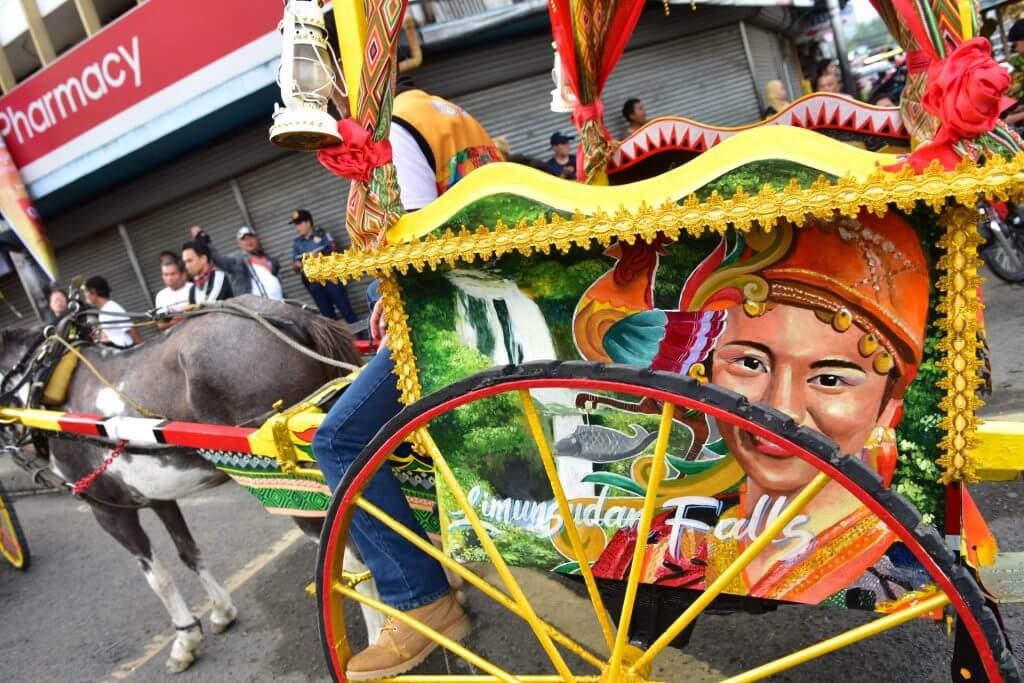
The tartanilya is also connected to local art and heritage events. GoIligan’s coverage of the Iligan Visual Arts Festival showed how local artists used tartanilyas as moving canvases for heritage-inspired designs, including an entry inspired by the Macaraeg-Macapagal House. This connects the tartanilya not only to transportation, but also to Iligan’s visual arts, cultural preservation, and tourism storytelling.
Strong Local SEO Value
For local content, the tartanilya creates a powerful geo-entity connection between Iligan City, Pala-o, Badelles Street, Tambacan Road, heritage tourism, public transportation, local artists, and cultural identity.
Tartanilya as a Cultural Icon in Iligan Arts and Tourism
The tartanilya is no longer just a transport symbol. It has also become part of Iligan’s cultural and creative storytelling.
One strong local example is the Iligan Visual Arts Festival coverage on GoIligan, which featured a tartanilya design competition that highlighted local heritage, tourism sites, and Iliganon creativity. The champion entry by Ivangers featured a design inspired by the Macaraeg-Macapagal House and was mounted on the tartanilya of Nemesio Tito Jr.
Other recognized references in the event included Dalipuga Centennial Park, Tomas Cabili Obesik Rotonda, and Limunsudan Falls. This matters because it shows how the tartanilya can carry more than passengers. It can carry memory, art, place identity, and civic pride.
For visitors, this gives the tartanilya deeper meaning. When you ride one, you are not only trying old transportation. You are encountering a local icon that Iligan continues to reinterpret through art, tourism, and public culture.
GoIligan Visual Arts Festival reference:
https://goiligan.com/iligan-visual-arts-festival-highlights-culture-heritage-and-tourism-with-winning-designs/
Ethical Riding Tips: Respect the Horse and the Kutsero
A tartanilya ride should be enjoyable, but it should also be responsible.
Before riding, check:
- Does the horse look healthy and alert?
- Is the carriage not overloaded?
- Is the kutsero treating the horse calmly?
- Is the route safe?
- Is the weather too hot for a long ride?
- Are you asking for a reasonable distance?
Avoid rides where the horse appears exhausted, injured, or overloaded. Heritage tourism should protect the people and animals that make the experience possible.
A good visitor is not just a passenger. A good visitor is a caretaker of the story.
Suggested Mini-Itinerary: Downtown Iligan Heritage Ride
Morning Option
8:00 AM – Start near Pala-o Market
Walk around the area and look for available tartanilyas.
8:30 AM – Take a Short Tartanilya Ride
Ask for a short route toward the Badelles or Tambacan area if available.
9:00 AM – Take Photos Respectfully
Ask permission before photographing the kutsero, horse, or other passengers.
9:30 AM – Continue to Breakfast or a Local Walk
Pair the ride with local food, market exploration, or a city walk.
Late Afternoon Option
4:00 PM – Go to the Tartanilya Area
This is usually more comfortable than riding under midday heat.
4:30 PM – Take a Relaxed Heritage Ride
Enjoy the slower pace before the city shifts into evening mode.
5:00 PM – Head to Coffee
End the experience with a local café stop.
What to Bring for a Tartanilya Ride
- Small bills or coins
- Water
- Hat or umbrella
- Phone or camera
- Handkerchief or wipes
- Light clothing
- Patience
- Respectful curiosity
For families with children, make sure kids stay seated. For seniors or mobility-challenged visitors, check if boarding the carriage is comfortable before committing to the ride.
Best Time to Experience the Tartanilya in Iligan
The best time is usually morning or late afternoon.
Morning is better if you want cooler weather and a more practical market-area experience. Late afternoon is better if you want softer light for photos and a slower end-of-day mood.
Avoid the hottest part of the day if you want a more comfortable ride. Also avoid heavy rain, since the experience is best when roads are dry and visibility is good.
During festivals or city celebrations, the tartanilya may become more visible as a cultural symbol. Always check Iligan City Tourism updates for event-based rides or heritage activities.
Nearby Attractions to Pair with a Tartanilya Ride
A tartanilya ride works best as part of a larger Iligan City itinerary.
Pala-o Market
Good for seeing local movement and everyday commerce.
Google Maps:
https://www.google.com/maps/search/?api=1&query=Pala-o+Public+Market+Iligan+City
St. Michael’s Cathedral Area
A useful downtown reference point for visitors exploring Iligan’s city center.
Google Maps:
https://www.google.com/maps/search/?api=1&query=St.+Michael%27s+Cathedral+Iligan+City
Iligan City Tourism Office
Useful for visitor guidance and official tourism updates.
Google Maps:
https://www.google.com/maps/search/?api=1&query=Iligan+City+Tourism+Office
Maria Cristina Falls
One of Iligan’s most iconic attractions and a strong addition to any heritage-plus-nature itinerary.
Google Maps:
https://www.google.com/maps/search/?api=1&query=Maria+Cristina+Falls+Iligan+City
Tinago Falls
A famous waterfall experience for visitors who want adventure beyond downtown.
Google Maps:
https://www.google.com/maps/search/?api=1&query=Tinago+Falls+Iligan+City
Macaraeg-Macapagal House
A heritage site that connects well with Iligan’s broader cultural story, especially because it has been used as a design inspiration in local tartanilya art competitions.
Google Maps:
https://www.google.com/maps/search/?api=1&query=Macaraeg+Macapagal+House+Iligan+City
Sample One-Day Iligan Heritage and Waterfalls Itinerary
8:00 AM – Downtown Tartanilya Ride
Start near Pala-o, Badelles, or Tambacan. Take a short ride and learn about Iligan’s traditional transport culture.
9:30 AM – Local Breakfast or Market Walk
Explore nearby food stalls or simple local eateries.
10:30 AM – Visit Maria Cristina Falls
Continue to one of Iligan’s most iconic waterfall destinations.
1:00 PM – Lunch in the City
Return downtown or eat near your next stop.
2:30 PM – Visit Tinago Falls or Timoga Springs
Choose adventure or relaxation depending on your energy level.
5:30 PM – Return to the City
Freshen up and slow down.
6:30 PM – End the Day with Coffee
Head to a local café and talk about the ride, the waterfalls, and the small city details you noticed along the way.
End the Day with Coffee at Urban Coffee Studio
After a tartanilya ride, end the day with coffee at Urban Coffee Studio in Tibanga. It fits the mood of a modern Iligan itinerary: heritage in the afternoon, coffee in the evening.
A tartanilya ride shows you the older pulse of the city. Coffee gives you space to process it.
Order something cold if the day was hot, sit down, review your photos, and write down the details you want to remember: the sound of the horse, the kutsero’s voice, the slow turn into the street, the market noise fading behind you.
Urban Coffee Studio Google Maps:
https://www.google.com/maps/search/?api=1&query=Urban+Coffee+Studio+Tibanga+Iligan+City
Urban Coffee Studio Facebook:
https://www.facebook.com/urbancoffeetibanga/
FAQ: Tartanilya Ride in Iligan City
What is the difference between tartanilya and kalesa?
They are similar horse-drawn carriages. “Kalesa” is more commonly used in many Philippine heritage destinations, while “tartanilya” or “tartanilla” is commonly used in Iligan City and some Visayan-speaking areas.
Are tartanilya and kalesa the same thing?
They are closely related. In everyday use, many people use the terms interchangeably. In Iligan, tartanilya is the stronger local term.
Where can I ride a tartanilya in Iligan City?
Check around Pala-o Market, Badelles Street, and Tambacan Road. These areas are commonly associated with tartanilya activity in Iligan.
How much is a tartanilya ride in Iligan City?
Fare may vary depending on distance, passenger count, and route. Ask and agree on the fare before boarding.
Is it safe to ride a tartanilya?
It can be safe when you ride responsibly, avoid overloading, sit properly, and choose a carriage that appears well-maintained. Always supervise children.
Can tourists ride the tartanilya?
Yes. Visitors can ride when available, especially around the known downtown route areas. Ask politely and confirm the route and fare first.
Is the tartanilya available every day?
Availability may vary. It is best to check the known route areas during daytime or ask locals near Pala-o Market.
Is the tartanilya good for seniors?
It can be enjoyable for seniors, but boarding may require care. Check the carriage height and seating comfort before riding.
Why is the tartanilya important to Iligan culture?
The tartanilya represents Iligan’s living transportation heritage. It also appears in local cultural events, tourism promotions, and visual arts activities, making it both a functional ride and a heritage icon.
Final Thoughts: Why the Tartanilya Still Matters in Iligan
The tartanilya is not the biggest attraction in Iligan City. It is not louder than Maria Cristina Falls, not as adventurous as Tinago Falls, and not as refreshing as Timoga Springs.
But it carries something different.
It carries memory.
A tartanilya ride lets you experience Iligan at street level. It reminds visitors that a city is not only built from landmarks. It is built from routes, habits, livelihoods, sounds, and traditions that survive because people still use them.
The tartanilya also continues to evolve. Through local events, visual arts competitions, and tourism campaigns, Iligan has turned this humble carriage into a moving symbol of heritage and creativity.
For anyone visiting Iligan City, the tartanilya is worth experiencing at least once. Ride it slowly. Ask respectfully. Pay fairly. Take photos with permission. Then end the day with coffee and let the old rhythm of the city stay with you a little longer.
In a fast-moving world, Iligan’s tartanilya remains a small but beautiful refusal to disappear.