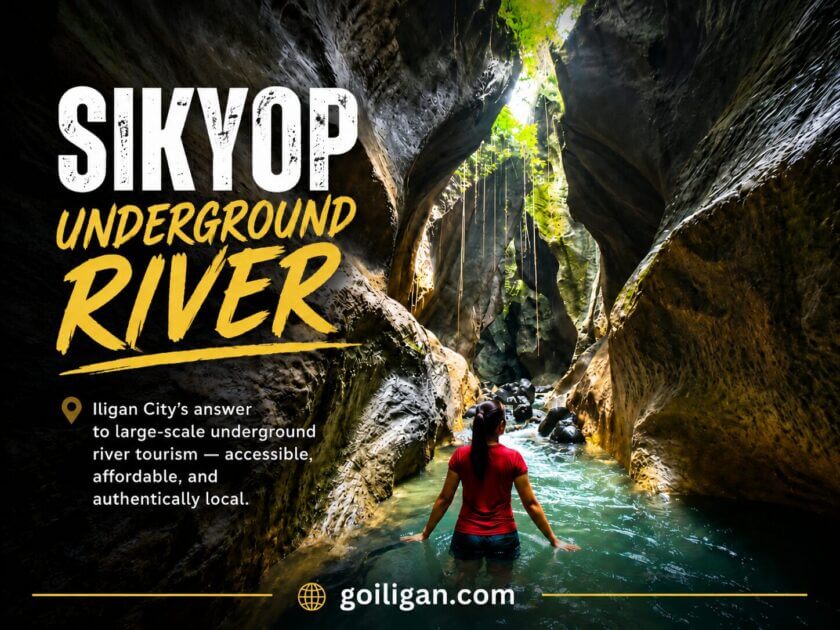
Set within the hilly terrain of Barangay Digkilaan in northern Mindanao, the Sikyop cave system is a karst formation typical of the Philippine limestone belt that runs through Lanao del Norte and surrounding provinces. The name “Sikyop” is derived from the local Maranao dialect, reflecting the indigenous community’s long relationship with the site.
What makes Sikyop distinct from more famous Philippine cave destinations:
- No reservation queues or tourist caps — access is direct and manageable
- Dual experience — underground cave exploration combined with surface agri-tourism
- Budget-friendly pricing — entrance fees are a fraction of Puerto Princesa costs
- Community-managed — local guides from Barangay Digkilaan operate all tours, keeping economic benefits in the community
For adventure travelers building a Mindanao itinerary, Sikyop pairs naturally with Iligan City’s Maria Cristina Falls, Tinago Falls, and other waterfalls in Iligan for a full multi-day adventure circuit.
Location and Geography of Sikyop Underground River
Sikyop Underground River is located in Barangay Digkilaan, Iligan City, Lanao del Norte, on the northern coast of Mindanao, Philippines.
Exact Location
- Barangay: Digkilaan
- City: Iligan City
- Province: Lanao del Norte
- Region: Northern Mindanao (Region X)
- Island: Mindanao
- Map tip: Search “Sikyop” in Barangay Digkilaan and coordinate with barangay guides — published coordinates for this site are unreliable
Barangay Digkilaan sits in the elevated inland zone of Iligan City, characterized by rolling limestone hills, secondary forest cover, and agricultural land. The barangay is part of the wider Iligan City watershed, which feeds several of the city’s famous waterfalls and river systems.
Terrain and Natural Context
The cave is embedded in a karst limestone landscape — the same geological formation responsible for notable underground rivers across the Philippines, including the Puerto Princesa Underground River and the caves of Marbel in Cotabato. Karst topography forms when slightly acidic groundwater dissolves soluble limestone over thousands to millions of years, creating hollow caverns, sinkholes, and subterranean drainage channels.
The Sikyop cave entrance sits at a modest elevation above the valley floor. Inside, the cave connects to a river that originates from groundwater percolating through the surrounding limestone plateau. The surrounding barangay land supports coconut farms, fruit trees, and vegetable plots that form part of the agri-tourism experience.
Proximity to Key Landmarks
| Starting Point | Approximate Distance | Travel Time |
|---|---|---|
| Iligan City Hall | ~25 km | 30–45 minutes |
| Iligan City Center (Quezon Avenue) | ~22 km | 30–40 minutes |
| Iligan National Highway | ~8 km from turnoff | 15–20 minutes |
| Cagayan de Oro City | ~90 km | 1.5–2 hours |
Physical Features and Characteristics of the Underground River
The Sikyop cave system is a navigable underground river passage estimated at several hundred meters in accessible length, with a cave ceiling height ranging from approximately 2 to 8 meters depending on the section.
Cave Dimensions
Exact scientific surveys of Sikyop’s full extent are not yet publicly published, which itself is a gap in the literature this guide addresses. Based on local guide accounts and visitor reports:
- Accessible cave length: approximately 200–400 meters of navigable passage
- River width: 1–4 meters, varying by section
- Water depth: shallow to waist-deep in most areas; some sections may require swimming
- Cave ceiling height: 2–8 meters average; some chambers open significantly wider
- Temperature inside cave: approximately 22–26°C year-round — noticeably cooler than the ambient outdoor temperature, which averages 28–33°C in Iligan
Geological Formations
The cave interior displays classic speleothem formations produced by calcium carbonate deposition:
Stalactites hang from the cave ceiling where mineral-rich water drips downward over centuries. In Sikyop, these appear in dense clusters in the upper chambers, creating dramatic ceiling textures that photograph well under flashlight or headlamp.
Stalagmites rise from the cave floor directly below drip points. Some formations in Sikyop have merged over millennia to create columns — one of the more visually striking features.
Flowstone — flat, layered calcium deposits — covers sections of the cave floor and walls, giving them a smooth, rippled appearance.
Cave pools form in low-lying sections where the underground river widens, creating still, reflective water that mirrors the formations above.
Cave Ecosystem
Like most active limestone cave systems in the Philippines, Sikyop supports a small cave ecosystem. Expect to see:
- Cave-dwelling bats — several insectivorous species roost in the upper chambers; their guano supports fungal growth that feeds invertebrates
- Cave crickets and other arthropods adapted to low-light environments
- Cave fish may be present in deeper, undisturbed sections; this has not been formally documented for Sikyop
The cave ecosystem is fragile. Touching formations is discouraged — skin oils inhibit mineral deposition and can permanently stain or damage speleothems.
How Sikyop Compares to Other Philippine Underground Rivers
| Feature | Sikyop (Iligan) | Puerto Princesa (Palawan) | Sohoton (Samar) |
|---|---|---|---|
| UNESCO Status | None | World Heritage Site | Protected Area |
| Navigable Length | ~200–400m | ~8.2 km | ~150m main section |
| Daily Visitor Cap | None formal | ~900/day | Limited |
| Crowd Level | Very low | Very high | Moderate |
| Entrance Fee Range | ₱50–₱150 | ₱150–₱250+ | ₱150+ |
| Agri-tourism Add-on | Yes | No | No |
| Best For | Budget adventurers | Bucket-list travelers | Eco-tourists |
History and Discovery of Sikyop Underground River
Sikyop Underground River has been known to the Maranao and Iligan communities for generations before it was developed as a formal tourism destination.
Indigenous and Community History
The cave and river pre-date organized tourism by centuries. Local oral tradition holds that the cave served as a refuge and water source for the barangay’s early settlers. The name “Sikyop” itself carries meaning in the local dialect, though precise etymology varies across sources. The surrounding land in Barangay Digkilaan has been farmed by local families for multiple generations, with the cave treated as a natural feature of the landscape rather than a commercial asset.
Tourism Development Timeline
Sikyop Underground River was formally opened as a community-based tourism destination in the early 2000s, as Iligan City’s local government unit (LGU) began developing adventure tourism assets to complement the city’s already-established waterfall circuit. The development was community-led — the barangay council, with support from the City Tourism Office, established guided tour protocols, basic infrastructure at the entrance, and local guide training.
The site gained attention in regional tourism circles around 2010–2015 as backpacker and adventure travel culture expanded in Mindanao, but it has remained deliberately small-scale compared to commercialized cave tourism in other Philippine regions.
The Iligan City Tourism Office continues to promote Sikyop as part of a broader adventure tourism portfolio that positions Iligan as a destination for active travelers, not just waterfall visitors.
Tourism Activities and Experiences at Sikyop
Visiting Sikyop Underground River typically involves a guided cave-and-river exploration of 1.5 to 3 hours, with optional agri-tourism activities on the surrounding farm land.
Core Activity: Underground River Cave Exploration
The standard tour follows a guided walk from the cave entrance through the underground passages, wading or swimming through river sections as required. Highlights include:
- Cave formations viewing — guides illuminate stalactites and stalagmites with flashlights and narrate their formation
- Underground river crossing — wading through the river sections, which range from ankle-deep to waist-deep depending on season and rainfall
- Natural chambers — the cave opens into wider chambers in several sections, providing vantage points to observe the ceiling and walls
- Photography spots — several formations and chamber angles are recognized photography points; guides typically know optimal lighting positions
Adventure Activities
Depending on water levels and guide availability, additional activities may include:
- Cave swimming — in deeper pool sections
- Spelunking extensions — for experienced visitors, guides may offer passage into less-developed sections of the cave
- Cliff viewing — exterior rock formations around the cave entrance provide vantage points for landscape photography
Agri-Tourism Component
This is the element that separates Sikyop from virtually every other Philippine underground river experience. The surrounding farm in Barangay Digkilaan produces tropical fruit (coconut, banana, jackfruit, cacao), root crops, and vegetables. Tour packages may include:
- Farm walk with guide narration on local agricultural practices
- Fresh fruit tasting — seasonal produce from the farm
- Community interaction — visitors engage directly with farming families
This agri-tourism layer is a genuine differentiator. No other underground river experience in the Philippines combines subterranean exploration with working farm immersion at this price point.
Tour Packages and Duration
| Package | Inclusions | Approx. Duration | Est. Cost |
|---|---|---|---|
| Cave Exploration Only | Guide, headlamp, cave access | 1.5–2 hours | ₱100–₱150/person |
| Cave + Farm Tour | Above + farm walk, fruit tasting | 3–4 hours | ₱150–₱250/person |
| Full Day Adventure | Above + lunch, extended farm | 5–6 hours | ₱300–₱500/person |
Prices are estimates based on community-managed rates. Confirm current rates with the Barangay Digkilaan tourism desk or the Iligan City Tourism Office.
Photography and Content Creation
Sikyop’s cave formations, underground pools, and exit views are highly photogenic. Key shots:
- Cave mouth exterior — the entrance framed by tropical vegetation
- Stalactite ceiling reflections in underground pools
- Silhouette shots of visitors wading the underground river
- Farm-to-cave composite shots showing the dual experience
Bring a waterproof case for your phone or camera. The cave sections involve water contact.
How to Get to Sikyop Underground River
Sikyop Underground River is accessible from Iligan City proper via private vehicle or motorcycle taxi (habal-habal) in approximately 30–45 minutes.
By Private Vehicle (Recommended)
- From Iligan City Hall, take the national highway heading south toward Lanao del Norte interior
- Turn toward Barangay Digkilaan — look for the barangay road sign from the main highway
- Follow the barangay road approximately 7–8 kilometers to the Sikyop farm and cave entrance
- Concrete road transitions to gravel in the final 2–3 km; a standard vehicle can navigate with care, but an SUV or 4×4 is preferable after heavy rain
Landmark reference: Digkilaan Barangay Hall is approximately 1 km before the cave entrance. Ask locals at the barangay hall for directions or a guide escort.
By Habal-Habal (Motorcycle Taxi)
Habal-habal is the most practical public transport option for Sikyop if you don’t have a private vehicle.
- From Iligan City Pala-o Market or the Iligan City Hall area, hire a habal-habal driver who knows Barangay Digkilaan
- Negotiate a round-trip rate including waiting time — expect ₱150–₱300 for the round trip from city center
- Confirm the driver knows the Sikyop Underground River specifically, not just the barangay
Tip: Arrange your habal-habal driver to wait, or get their contact number for the return trip. Habal-habal from Digkilaan back to the city can be scarce after noon.
By Jeepney (Budget Option)
Jeepneys servicing Barangay Digkilaan may operate from the Pala-o or Lanao del Norte transport terminals, but schedules are infrequent. This is only practical for travelers with flexible timing. Confirm routes at the terminal before departure.
From Cagayan de Oro City
CDO is approximately 90 km from Iligan City via the Iligan-CDO highway. Take a Ceres Liner or Bachelor Express bus to Iligan City (1.5–2 hours), then proceed by habal-habal or private vehicle to Barangay Digkilaan.
Best Time to Visit
- Morning visits (7:00–10:00 AM) — cooler temperatures, lower water levels after overnight dry period, better lighting for cave photography near the entrance
- Dry season (March–May, November–January) — easier road access, lower water levels inside the cave
- Avoid immediately after heavy rain — cave water levels rise significantly and access may be restricted by guides
Visitor Information and Practical Tips
Contact & Location Details
Sikyop Underground River Barangay Digkilaan, Iligan City, Lanao del Norte 9200, Philippines
Iligan City Tourism Office (booking and inquiries): 📞 +63-63-221-4485 🌐 iligangovernment.ph 📧 tourism@iligan.gov.ph
Published by: GoIligan.com — Iligan City’s Travel & Tourism Guide 🌐 goiligan.com 📧 hello@goiligan.com
Entrance Fees (2025)
| Fee Type | Amount (Estimated) |
|---|---|
| Entrance Fee (Adult) | ₱50–₱100 |
| Guide Fee | ₱100–₱150 per group |
| Full Package (Cave + Farm) | ₱150–₱250 per person |
Always confirm current rates on arrival. Community-managed fees may change seasonally.
Operating Hours
Open daily: 7:00 AM – 5:00 PM Last entry is typically 3:00 PM to allow tour completion before closing.
What to Bring
Essential:
- Rubber shoes or waterproof footwear (no open-toed sandals)
- Change of clothes and dry bag for valuables
- Headlamp or flashlight (often provided but bring your own as backup)
- Water (minimum 1L per person)
- Snacks for longer tours
Recommended:
- Waterproof phone case or dedicated waterproof camera
- Insect repellent
- Sunscreen for the outdoor farm sections
- Lightweight rain jacket (cave interiors can be damp; exterior paths exposed to afternoon rain)
Leave behind:
- Expensive jewelry
- Non-waterproof electronics
Fitness and Accessibility
- Minimum fitness level: Moderate — the standard route involves 1–2 km of walking over uneven terrain plus wading through water
- Suitable for: Adults and children aged 8+; children must be accompanied
- Not recommended for: Visitors with severe claustrophobia, mobility impairments, or medical conditions exacerbated by cold, damp environments
- Swimming ability: Non-swimmers can complete the standard route (shallow water sections), but swimming ability is required for extended cave exploration
Safety Protocols
Guides enforce these protocols on all tours:
- No entry without a licensed local guide
- Headlamp or flashlight required at all times inside the cave
- No touching of cave formations (speleothem protection)
- Stay with the group — no solo exploration
- Children must stay within arm’s reach of an adult
- In case of rising water, guides will direct immediate exit — follow instructions without delay
Accommodation and Dining Near Sikyop
Sikyop has no on-site accommodation. Nearest options are in Iligan City proper (22–25 km):
Budget accommodation in Iligan City:
Check – https://goiligan.com/best-hotels-in-iligan-city-2026-complete-guide/
Dining before/after your visit:
- Local restaurants along the national highway en route to Digkilaan serve standard Filipino meals
- The farm tour may include fresh fruit; bring your own food if visiting only for cave exploration
Frequently Asked Questions About Sikyop Underground River
How do I get to Sikyop Underground River from Iligan City?
From Iligan City proper, take a habal-habal or private vehicle to Barangay Digkilaan. By private car, take the national highway toward Lanao del Norte interior, turn at the Digkilaan barangay road, and follow approximately 7–8 km to the cave entrance. Travel time is 30–45 minutes. Habal-habal from the city center runs ₱150–₱300 round-trip.
What is the entrance fee to Sikyop Underground River?
Entrance fees at Sikyop Underground River are approximately ₱50–₱100 per person for basic access, with guide fees of ₱100–₱150 per group. Full packages including the agri-tourism farm component run ₱150–₱250 per person. Confirm current rates with the Iligan City Tourism Office at +63-63-221-4485.
How long does the Sikyop Underground River tour take?
A standard cave exploration tour takes 1.5–3 hours. Full-day packages that include the farm, fruit tasting, and lunch run 4–6 hours. Plan your habal-habal or vehicle timing accordingly, especially if returning to Iligan City by nightfall.
Is Sikyop Underground River safe for beginners?
Yes, Sikyop is appropriate for beginners. The standard route is rated moderate difficulty — it involves walking, some wading, and navigating through cave passages by flashlight. Guides are mandatory and manage pace and safety throughout. The cave is not a technical spelunking experience; no specialized gear beyond rubber shoes and a headlamp is required.
What should I bring when visiting Sikyop Underground River?
Bring rubber shoes or waterproof footwear, a change of clothes, a headlamp, water (minimum 1L), snacks, a waterproof bag for valuables, insect repellent, and a waterproof phone case. Avoid open-toed sandals and leave expensive electronics at your accommodation.
Can I visit Sikyop Underground River without a guide?
No. All visitors must be accompanied by a licensed local guide from Barangay Digkilaan. The cave passages are dark, involve water crossings, and can be disorienting without prior knowledge of the route. Self-guided entry is not permitted and is genuinely unsafe. Guides are arranged at the entrance.
Why Sikyop Deserves More Recognition
Sikyop Underground River is one of the most underrated adventure destinations in Northern Mindanao. It delivers what large cave tourism complexes promise but rarely achieve — an intimate, unmediated encounter with a living cave system, managed by the community that has coexisted with it for generations.
For travelers already visiting Iligan City for its waterfall circuit, adding Sikyop adds a full cave dimension to the trip at minimal cost. For adventure seekers building a Mindanao itinerary, Sikyop is a legitimate alternative to Puerto Princesa without the flight, permit queues, and tourist infrastructure overhead.
The agri-tourism component is genuinely unique in the Philippine underground river category. No other site in the country currently offers this combination at scale.
The gap between Sikyop’s quality and its current visibility is primarily an information gap — which is exactly what this guide is designed to close.
External References and Sources
- Iligan City Official Website — Tourism
- Department of Tourism — Northern Mindanao (Region X)
- Department of Environment and Natural Resources — Protected Areas, Philippines
- Puerto Princesa Subterranean River National Park — UNESCO
- Philippine Cave Conservation Guidelines — DENR
- Karst Topography Overview — USGS
Published by GoIligan.com — the definitive travel guide to Iligan City, Lanao del Norte.