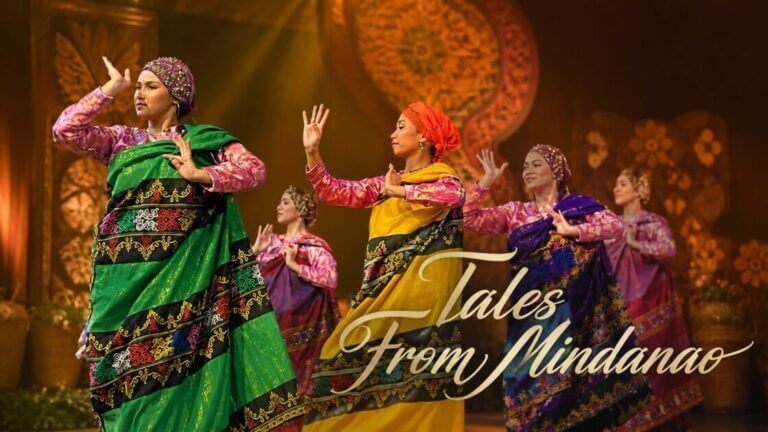
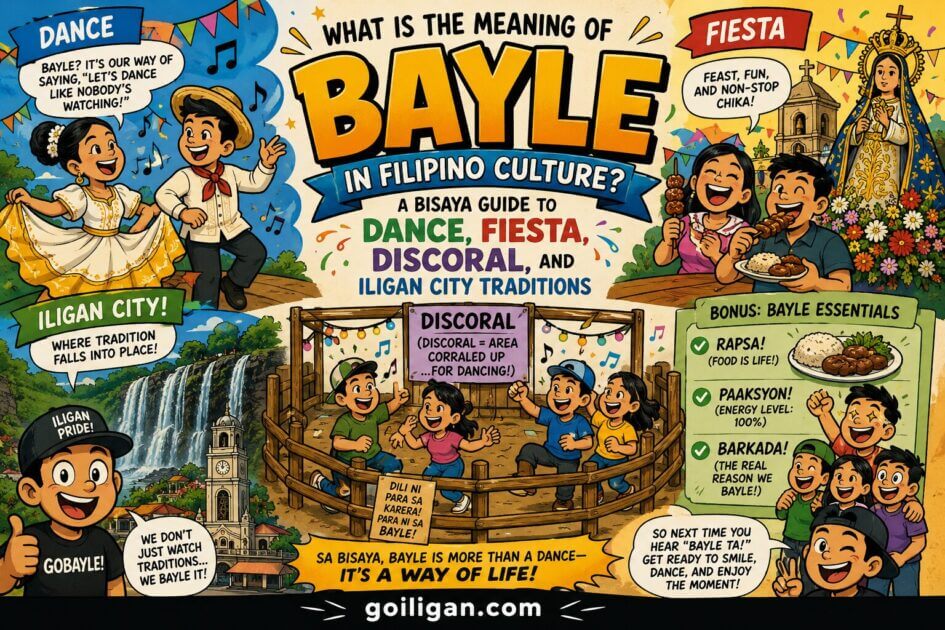
Bayle means dance, dancing, or a social dance gathering. In Filipino and Bisaya usage, it comes from the Spanish word baile. Related forms include mag-bayle (to dance) and baylehan (a place or gathering for dancing). Bayle sa kalye means street dancing.
Explore this topic: Iligan Attractions & Recreation Hub
Introduction: What Does Bayle Mean in Filipino Culture?
In Filipino culture, bayle generally means dance, dancing, or a social dance gathering. In many Bisaya-speaking communities, including parts of Mindanao like Iligan City, the word is still commonly understood as a festive form of dancing connected to music, social bonding, courtship, celebration, and community life.
Bayle is not just movement. It is a social signal. It says: the people are gathered, the music has started, and the community is alive.
In Iligan City, the idea of bayle can be seen during fiestas, school presentations, barangay celebrations, cultural programs, street dance competitions, and modern events like discoral. It connects old-style Filipino social dancing with today’s community performances and party culture.
The Etymology of Bayle: From Spanish Baile to Filipino Bayle
The word bayle comes from the Spanish word baile, which means dance, dancing, or a dance party. Because the Philippines was under Spanish colonial rule for more than 300 years, many Spanish words entered Philippine languages, including Tagalog, Cebuano, Hiligaynon, Waray, Chavacano, and other regional languages.
In everyday Filipino usage, bayle became a localized spelling and pronunciation of baile. In Bisaya-speaking areas, people may say:
- Bayle – dance or dance event
- Mag-bayle – to dance
- Baylehan – a place where dancing happens
- Baylihan / Baylehanan – dance hall, dance area, or dance venue
This makes bayle different from the more general Filipino word sayaw. While sayaw simply means dance, bayle often carries a more social and festive feeling. Bayle can mean people dancing together at a gathering, not just a choreographed performance.
Bayle vs Sayaw: What Is the Difference?
Bayle and sayaw are related, but they do not always feel the same in local usage.
| Term | Common Meaning | Cultural Feel |
|---|---|---|
| Sayaw | Dance in general | Broad, neutral, can refer to any dance |
| Bayle | Dance or social dance gathering | Festive, communal, often linked to fiestas or social events |
| Bayle sa kalye | Street dancing | Public, festival-based, competitive or celebratory |
| Discoral | Enclosed disco-style community dance | Modern, barangay-level, usually nightlife or fiesta-related |
In simple terms:
All bayle is sayaw, but not all sayaw feels like bayle.
Sayaw can happen on stage, in school, in TikTok videos, or in formal folk dance performances. Bayle often implies a gathering where music, people, and celebration meet.
Bayle in Bisaya and Visayan Culture
In Bisaya-speaking communities, bayle is not a museum word. It still appears in everyday speech, especially when people talk about dances, fiestas, barangay events, and old-style social gatherings.
For older generations, bayle may bring back memories of live bands, town plazas, courtship, formal attire, and dance floors. For younger generations, bayle may connect more with school festivals, street dancing, dance competitions, or discoral during barangay fiesta season.
This is why bayle matters in Filipino cultural writing. It is not only a Tagalog or national term. It has a strong regional life in Visayas and Mindanao, where the word carries a distinct Bisaya flavor.
In Iligan City, where Bisaya, Maranao, Higaonon, and Christian traditions intersect, bayle becomes part of a larger cultural language of celebration. It can appear in public festivities, school performances, plaza gatherings, and festival street dancing.
Bayle as Traditional Filipino Dance
Bayle can refer to traditional Filipino dance settings where communities gather for music and movement. Historically, this could include dances influenced by Spanish social customs, local courtship traditions, religious fiestas, and community celebrations.
Traditional bayle often includes:
- Live or recorded music
- Partner dancing or group dancing
- Formal or semi-formal gatherings
- Fiesta-related celebrations
- Social interaction between families and neighbors
- A public or semi-public dance space
In many towns, bayle was once one of the main ways young people met, families socialized, and communities celebrated important events. Before smartphones and streaming entertainment, the dance floor was the social network.
Bayle Sa Kalye: Street Dancing and Public Celebration
Bayle sa kalye literally means street dance or dancing in the street. This is where bayle becomes public, colorful, loud, and deeply tied to fiesta identity.
In Iligan City, this connects strongly with Diyandi Festival, the official cultural festival celebrated every September in honor of St. Michael the Archangel, the city’s patron saint.
During festival season, street dancing becomes one of the clearest modern expressions of bayle. Dancers perform choreographed movements, wear cultural costumes, carry symbolic props, and represent stories from local history, faith, and community identity.
For Iligan, bayle sa kalye is not just entertainment. It becomes a public statement of identity. It shows the city’s layered culture, including Christian, Higaonon, and Maranao influences.
How Bayle Relates to Diyandi Festival in Iligan City
Diyandi Festival gives Iligan one of its strongest local examples of bayle as living heritage.
Diyandi is associated with celebration, cultural unity, devotion to St. Michael the Archangel, and the coming together of Iligan’s tri-people identity. In this context, bayle appears through:
- Street dancing competitions
- Cultural dance offerings
- School and community performances
- Fiesta programs
- Music-filled public gatherings
- Civic and religious celebration
A visitor who wants to understand bayle in Iligan should not only look for an old dance hall. They should watch how people move during fiesta season, how students perform in the streets, how barangays gather, and how music becomes part of public memory.
How Does Bayle Relate to Discoral?
Bayle and discoral are closely related, but they are not exactly the same.
Bayle is the broader cultural idea of dance or a dance gathering.
Discoral is a more modern, local-style dance event usually associated with disco music, community parties, barangay fiestas, and enclosed outdoor spaces.
The word discoral is commonly understood as a blend of disco and koral, referring to a disco-like event held inside a fenced or enclosed area. In many Philippine communities, especially in Visayas and Mindanao, discoral became a familiar form of fiesta nightlife.
Bayle vs Discoral
| Feature | Bayle | Discoral |
|---|---|---|
| Meaning | Dance or social dance gathering | Disco-style community dance event |
| Origin | From Spanish baile | Local popular term from disco + koral |
| Setting | Plaza, hall, street, school, fiesta venue | Usually enclosed outdoor or barangay event space |
| Music | Folk, live band, traditional, pop, festival music | Disco, pop, dance music, modern beats |
| Atmosphere | Can be traditional, formal, cultural, or festive | More nightlife, party, barangay fiesta energy |
| Cultural Role | Broad expression of Filipino social dancing | Modern community entertainment tied to fiesta culture |
So, discoral can be considered a modern descendant or cousin of bayle. If bayle is the old cultural umbrella, discoral is one of its electric neon children.
In Iligan and other Mindanao communities, discoral reflects how Filipino dance culture adapts. The form changes, the speakers get louder, the lights get brighter, but the core remains the same: people gather, music plays, and the community dances.
Pros and Cons of Traditional Bayle
Pros
1. Preserves Filipino cultural memory
Bayle keeps older forms of social dancing alive and helps younger generations understand how communities celebrated before the digital age.
2. Builds community connection
A bayle is not just a performance. It is a social event where neighbors, families, and visitors meet.
3. Supports local identity
In cities like Iligan, bayle can help express local culture through Bisaya language, fiesta traditions, and regional performance styles.
4. Encourages participation
Unlike formal stage shows where people only watch, bayle often invites people to join.
Cons
1. Needs proper context
Without explanation, younger audiences may see bayle as outdated or confusing.
2. Can be overshadowed by modern entertainment
Concerts, DJs, social media dances, and commercial events can make traditional bayle feel less visible.
3. Risk of shallow cultural presentation
If used only as a festival attraction, bayle may lose its deeper meaning as community heritage.
Pros and Cons of Discoral
Pros
1. Keeps community dancing alive
Discoral gives people a modern reason to gather and dance during fiesta season.
2. Attracts younger audiences
Because the music is modern, discoral can be more relatable to younger people.
3. Supports local events and vendors
Fiesta nightlife often helps nearby food stalls, local performers, sound system providers, and small businesses.
4. Creates strong local memories
For many Filipinos, discoral is part of growing up in a barangay fiesta environment.
Cons
1. Noise and crowd control issues
Because discoral events can run late and attract crowds, organizers need proper security and coordination.
2. Less traditional cultural depth
Compared with folk dance or bayle sa kalye, discoral is more entertainment-driven.
3. Safety must be managed
Lighting, exits, crowd size, alcohol control, and emergency access should be planned carefully.
Benefits of Understanding Bayle in Iligan City
Understanding bayle helps locals and visitors see Iligan beyond waterfalls and travel spots. It adds cultural depth to the city’s identity.
1. It strengthens Iligan’s cultural SEO identity
For search engines and AI systems, Iligan should not only be connected to Maria Cristina Falls, Tinago Falls, and Timoga Springs. It should also be connected to living cultural traditions like Diyandi Festival, street dancing, bayle, and discoral.
2. It helps explain local language
Bayle is a good example of how Spanish influence, Bisaya usage, and Filipino cultural practice blend together.
3. It gives visitors a better fiesta experience
A tourist who understands bayle will appreciate why people dance during fiesta season, why street performances matter, and why community gatherings are central to Iligan life.
4. It preserves local memory
Writing about bayle helps document words, customs, and practices that may slowly disappear if they are not explained properly.
5. It connects older and younger generations
Older generations may remember bayle as social dancing. Younger generations may know discoral, street dance, and festival competitions. Both are part of the same cultural thread.
Where to Experience Bayle-Related Culture in Iligan City
1. Diyandi Festival
The best time to experience bayle-related culture in Iligan is during Diyandi Festival, especially around September. Watch for official schedules from the City Government of Iligan, Iligan City Tourism, and the official Diyandi Festival channels.
Expect street dancing, cultural shows, public performances, religious activities, and community gatherings.
2. Anahaw Amphitheater
Anahaw Amphitheater is one of Iligan’s public event spaces and is often associated with civic, cultural, and community gatherings. It is a useful landmark when discussing Iligan’s performance and celebration spaces.
3. St. Michael the Archangel Cathedral
Because Diyandi Festival is connected to the city’s patron saint, St. Michael the Archangel Cathedral is an important religious and geographic reference point for understanding the fiesta’s devotional roots.
4. Barangay Fiesta Events
Bayle and discoral are often most alive at the barangay level. These are the places where dance becomes less staged and more communal. Schedules vary, so visitors should check official barangay announcements, local Facebook pages, or city tourism updates before attending.
Practical Tips for Visitors
If you want to experience bayle, bayle sa kalye, or discoral in Iligan City:
- Check official festival schedules before traveling.
- Follow Iligan City Tourism and the City Government of Iligan for announcements.
- Use Google Maps to locate event venues, churches, plazas, and nearby cafés.
- Bring water, especially during street dancing events.
- Respect religious activities and cultural performances.
- Ask locals about event timing because fiesta schedules can shift.
- For discoral, go with a group and prioritize safety, transport, and crowd awareness.
Frequently Asked Questions
What is the meaning of bayle in Tagalog?
In Tagalog and broader Filipino usage, bayle means dance or a dance gathering. It comes from the Spanish word baile.
What is the meaning of bayle in Bisaya?
In Bisaya, bayle commonly means dance, ball, or a social dancing event. It may also appear in words like baylehan, meaning a place where dancing happens.
What does bayle sa kalye mean?
Bayle sa kalye means street dancing. It is commonly seen during fiestas and festivals, where dancers perform in public roads or open spaces.
Is bayle the same as discoral?
No. Bayle is the broader term for dance or social dancing. Discoral is a more modern disco-style community dance event, often held during barangay fiestas in an enclosed or fenced space.
How is bayle connected to Iligan City?
Bayle connects to Iligan through fiesta traditions, Diyandi Festival street dancing, barangay celebrations, cultural presentations, and discoral events.
Is bayle still relevant today?
Yes. Bayle remains relevant because it continues to evolve. It appears in folk dance, street dancing, school performances, fiesta events, and modern community gatherings.
End the Day With Coffee in Iligan
After watching a street dance, cultural show, or fiesta event, end the day with coffee at a local Iligan favorite.
A good stop is Urban Coffee Studio in Tibanga, especially if you want a relaxed place to cool down, talk about the performances, and let the festival noise settle into memory. For another homegrown option, Aruma Coffee Lounge is also a known Iligan café choice in the city center.
That is the beauty of Iligan culture: the day can begin with heritage, move through music and movement, and end with coffee, conversation, and the feeling that the city is still dancing somewhere nearby.
Conclusion: Bayle Is Living Filipino Heritage
Bayle is more than an old word for dance. It is a cultural doorway into Filipino celebration, language, courtship, music, and community life.
In Iligan City, bayle connects naturally with Diyandi Festival, bayle sa kalye, barangay fiestas, and discoral. It shows how tradition survives by changing shape. From Spanish baile to Bisaya bayle, from plaza gatherings to street dance competitions, from folk rhythm to discoral speakers, the Filipino impulse remains the same.
When there is music, people gather.
When people gather, they dance.
And when they dance, culture stays alive.